I'm no longer defaulting to WordPress or Webflow for marketing sites.
The better model is straightforward: a developer builds a proper site once, then the business maintains it through AI tools connected to GitHub — ChatGPT Codex, Anthropic Claude, or similar.
Below is the stack, in order, and a real photo swap I ran end to end.
Why the old options fall short
WordPress is flexible, but you're permanently managing plugins, themes, updates, and security.
Webflow and page builders work well for design teams who live in them. They get awkward the moment a non-designer only needs to swap one photo or fix a line of copy.
Custom sites under the old process look great at launch — then every small change becomes a ticket, a wait, and another billable round.
There's a fourth path: build the site correctly in code, hand it off, and let AI handle day-to-day maintenance against the same repository the developer shipped.
How the stack works (top to bottom)
Keep the stack simple on purpose. Simple stacks are reliable — and the sequence matters.
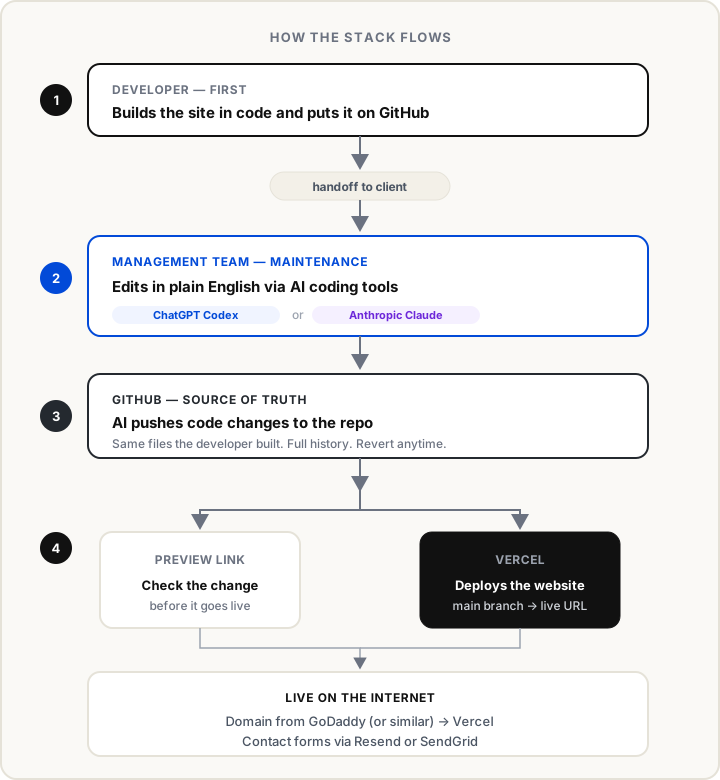
- Developer builds first. Structure, design system, SEO foundations, forms, and performance — in real code — then pushed to GitHub.
- Handoff to the management team. Marketing or operations owns routine updates after launch.
- They edit through AI. ChatGPT Codex or Anthropic Claude connects to that GitHub repo. Requests stay in plain English: swap a photo, update hours, fix a headline.
- Changes land on GitHub. The repo remains the source of truth, with full history and a clean path to revert.
- Preview, then Vercel. Review a preview before anything goes public. When approved, Vercel deploys production. A domain (GoDaddy or similar) points at Vercel; contact forms go through Resend or SendGrid.
Need user accounts or other app-like features later? Add a backend then. Most brochure and lead-gen sites do not need that complexity on day one.
A real session: swapping a photo with Codex
I ran this on a live project — Birch Island Cottage — with Codex connected to the GitHub repository. No WordPress admin. No Webflow designer seat. Just conversation, the source files, and a preview.
Codex sits beside regular ChatGPT, with a different job: build, debug, and ship code.
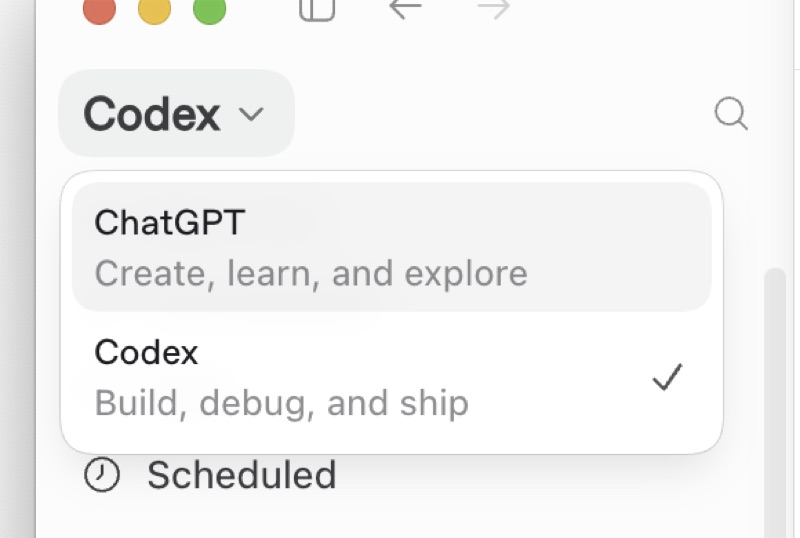
1. It found the project on GitHub
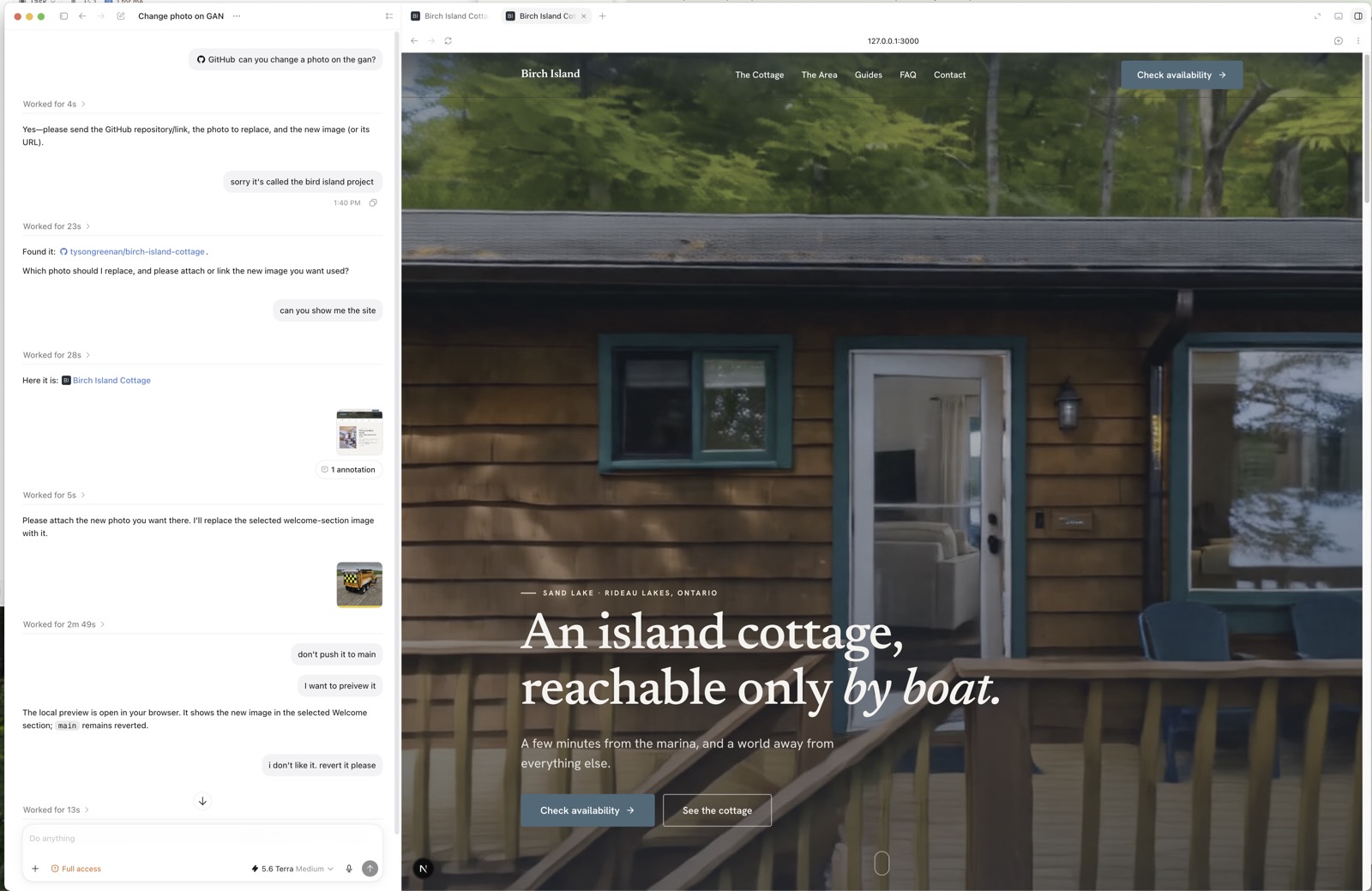
I asked whether it could change a photo on the site. Codex asked for the repository. I gave the project name — slightly wrong, even — and within seconds it resolved tysongreenan/birch-island-cottage.
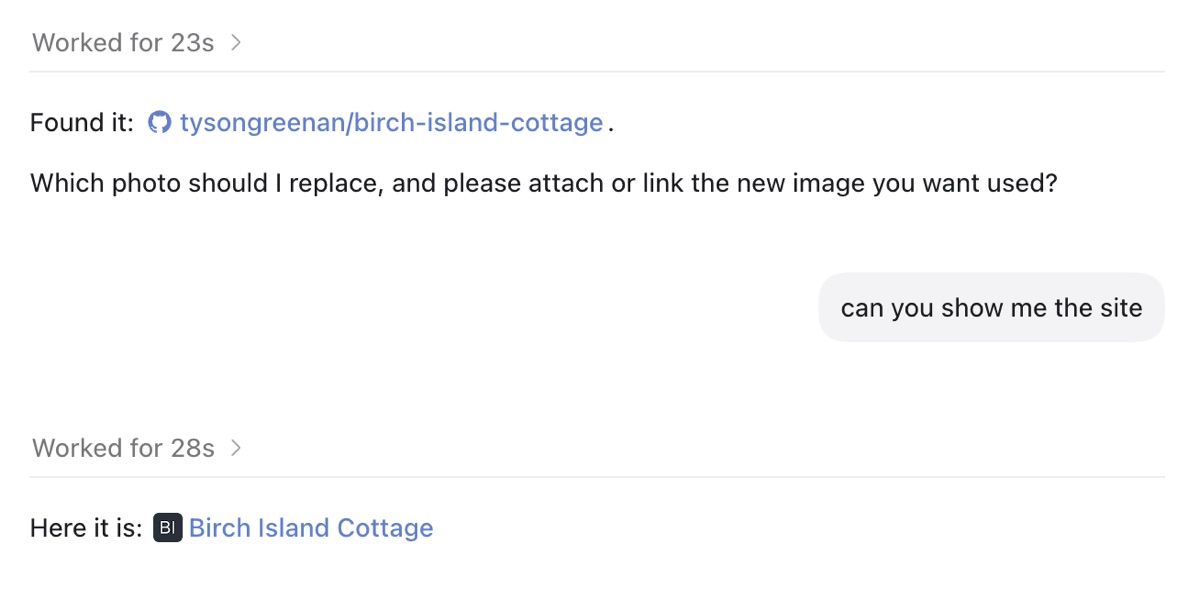
2. I pointed at the exact photo
I asked Codex to show me the site, then annotated the welcome-section image with a simple note: change this photo.
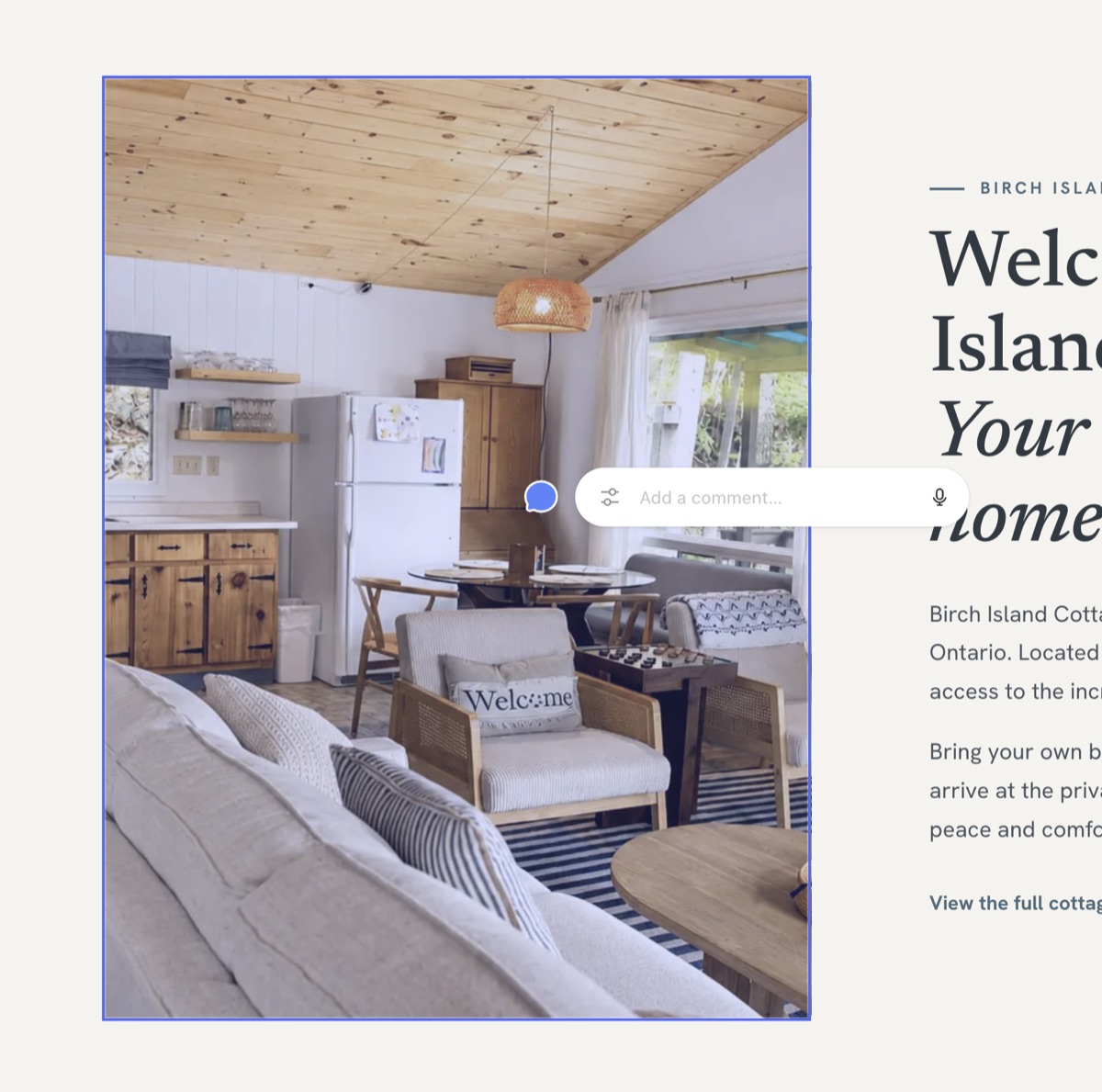
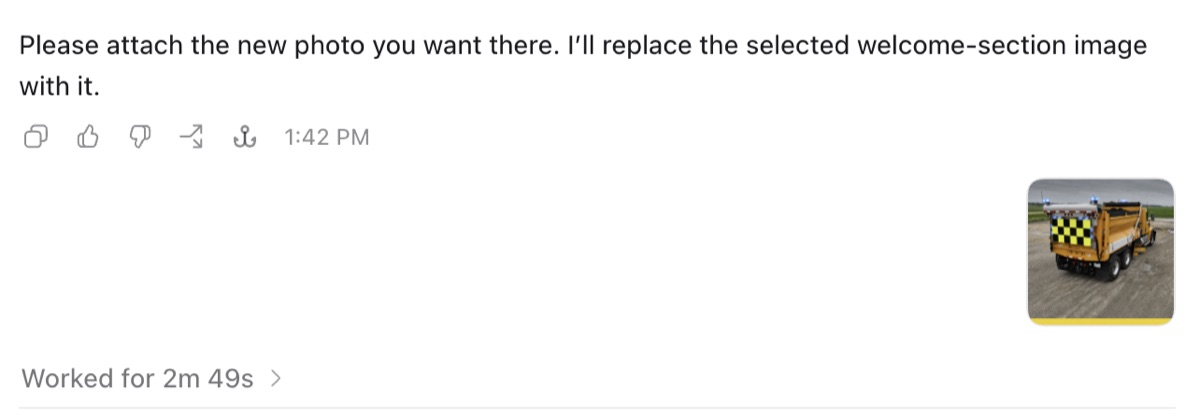
3. I attached the replacement image in chat
I dropped the new file into the conversation. No FTP. No media library. No waiting on a shared folder "when someone has time."
4. Preview first — production stays untouched
I told it not to push to main and that I wanted a preview. Codex opened a local preview with the new image in the welcome section and left production alone.
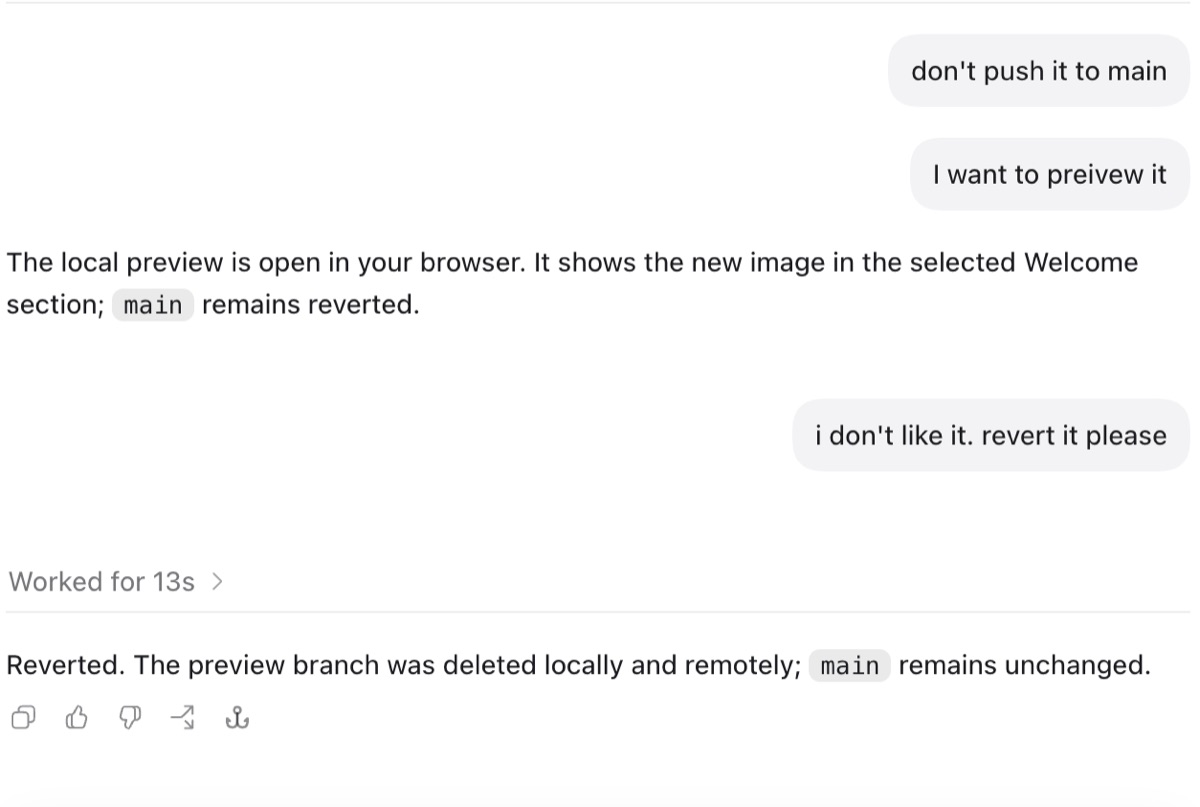
I didn't like the result, so I asked it to revert. The preview branch was removed. Main was unchanged.
Why this model is stronger
Maintenance stops taxing the developer relationship. Photo swaps, hours, headlines, and seasonal copy can move through marketing in chat. Developers stay on architecture, larger features, and quality — not endless micro-tickets.
The goal is not "clients never need developers." It is "clients should not need a developer to change a photo."
SEO improves when the site is clean code. AI can tighten titles, headings, alt text, internal links, and schema against real files — not inside a theme that wraps every paragraph in three layers of markup. I have seen substantial ranking gains from that discipline alone.
Performance stays high. A focused site on Vercel avoids the admin and plugin weight that slows traditional CMS stacks.
The foundation still requires craft. Brand, layout, accessibility, forms, analytics, and the deploy pipeline are still a developer's job at the start. AI maintenance works because that foundation is solid — not instead of it. The developer builds the house; AI is the lightbulb phase.
What belongs in AI maintenance
A strong fit: swapping photos, updating contact details and hours, refining copy, fixing obvious SEO gaps, small layout tweaks, and seasonal content.
Still plan carefully with a developer: payments, user accounts, major information architecture, compliance-sensitive work, and full redesigns.
Codex and Claude can also handle larger work — even new pages — but that is a separate conversation. This post is about the everyday loop: request → edit → preview → ship or revert.
What changes for clients and developers
Before: screenshots over email, interpretation gaps, delayed deploys, then another round of "one more thing."
After: the person closest to the content describes the change in English, previews it, and only then ships — or reverts without drama.
The site stops feeling locked. Developers stop living in maintenance mode. Trust goes up on both sides.
The case, simply
I am betting the winning marketing website of the next few years is custom enough to be fast and searchable, versioned in GitHub, hosted on something like Vercel, and maintainable by non-developers through AI coding agents.
Not another locked-in page builder. Not a retainer for every hero image.
If "can you change this photo?" is still a full project, it is time to rethink the stack.